

Uber and Wayve Launch London Robotaxis as Tesla’s Cybercab Test Nears
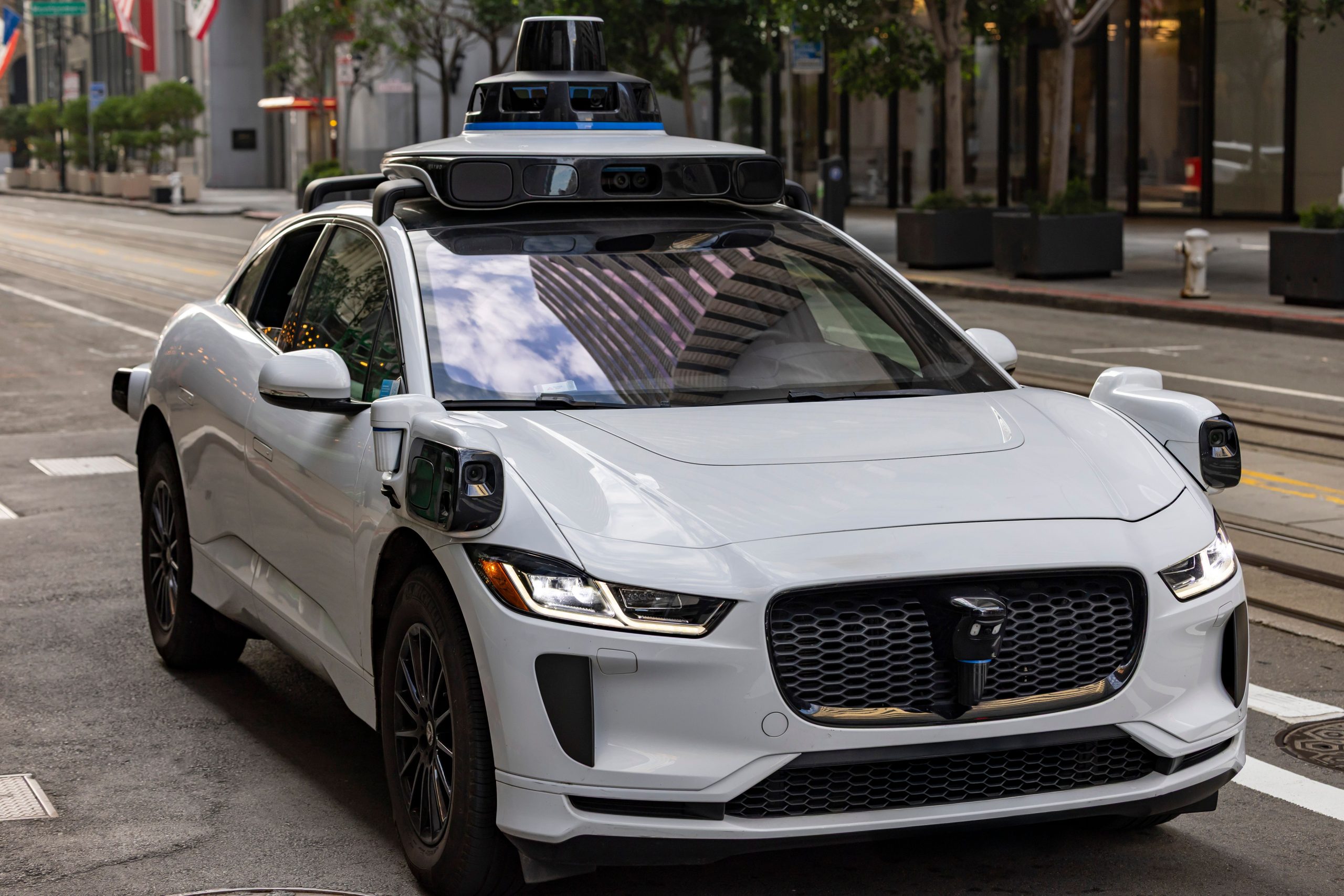
NetNapz Market Desk · September 3, 2026 — Uber and British AI company Wayve have launched autonomous rides in London, creating a fresh competitive signal for the global robotaxi trade just as Tesla prepares a high-profile Cybercab event in Austin. The launch is small at first, but the market significance is larger: autonomous mobility is moving from demonstrations and pilot programs toward paid consumer service across more major cities.
Reuters reported that fewer than 20 Wayve-powered Ford Mustang Mach-E vehicles will initially operate through Uber in London. Riders requesting UberX, Uber Comfort or Uber Electric may be matched with one of the vehicles at no extra cost. A licensed operator will initially remain inside the car, meaning this is not yet a fully driverless commercial deployment.
The timing matters for traders because Uber, Wayve, Tesla, Alphabet’s Waymo and Amazon’s Zoox are increasingly competing around the same question: who can convert autonomous-driving technology into a scalable, regulator-approved transport network rather than an expensive engineering project.
Why the London launch matters
London is a difficult proving ground. Dense traffic, narrow roads, pedestrians, cyclists, buses and highly variable street geometry make the city materially different from the more structured environments where many autonomous-driving programs began. Wayve says its AI Driver learns from experience and adapts to new roads, vehicles, weather and cities rather than relying only on heavily pre-mapped routes.
That makes the rollout strategically important even though the initial fleet is small. A successful supervised service can generate operational data, build consumer familiarity and help Uber and Wayve demonstrate reliability to regulators before attempting fully driverless operation.
Reuters said London is the second European city after Zagreb where Uber offers robotaxi rides. The company invested in Wayve in 2024 and has positioned autonomous vehicles as a major future growth area alongside its conventional ride-hailing network.
The market read-through for Uber
Uber’s advantage in autonomy is different from that of a vehicle manufacturer. It does not need to win by owning every self-driving technology stack. Its platform can potentially aggregate fleets from multiple autonomous partners and route demand toward whichever operators have regulatory approval and vehicle availability in a given city.
That model could reduce the capital intensity of building a proprietary global robotaxi fleet, but it also creates dependence on outside technology providers. The core trader question is whether Uber can preserve attractive economics when autonomous vehicle operators eventually demand a larger share of ride revenue.
For now, the London launch strengthens Uber’s claim that its consumer network can serve as a distribution layer for autonomous fleets. If that model scales, Uber could participate in the robotaxi transition even if several different technology stacks survive.
Tesla’s Cybercab event raises the competitive stakes
The fresh London rollout lands just as Tesla prepares an Austin event centered on its purpose-built Cybercab. Reuters reported that the two-seat Cybercab has no steering wheel or pedals in its intended configuration and was designed specifically for autonomous operation. Tesla began producing some Cybercabs in April and has been testing them on public roads.
Tesla has not disclosed whether the Cybercab has all regulatory approvals needed for broad commercial service. That distinction matters. Hardware production, autonomous-driving performance and legal permission to carry paying passengers are separate milestones, and the market has often priced them as though they arrive together.
The contrast between Uber/Wayve and Tesla is therefore useful for traders. Uber and Wayve are taking a supervised, regulator-facing deployment path in London. Tesla is aiming for a vertically integrated network built around its own vehicles and unsupervised FSD technology. The winning model may differ by city and regulatory regime.
This is not yet a volume event large enough to move Uber’s earnings model by itself. The significance is structural. Robotaxi competition is broadening geographically at the same time that companies are testing very different commercialization strategies.
For Tesla, the London launch raises the benchmark around execution. Investors will increasingly compare Cybercab claims against live services from Uber partners, Waymo and other operators. For Uber, the key opportunity is to prove that its existing demand network remains valuable even when human drivers are removed from part of the system.
What to watch next
Regulatory progress in London
Transport for London and other UK authorities remain central to whether supervised rides can transition into fully driverless service. Delays, additional safety requirements or restrictions on operating areas would slow the commercial thesis.
Fleet size and utilisation
Fewer than 20 vehicles is a technology and consumer test, not a scaled transport network. Traders should watch for evidence that the fleet expands, ride availability improves and passenger utilisation becomes economically meaningful.
Tesla Cybercab disclosures
The most important details from Tesla’s Austin event will be operational rather than promotional: regulatory status, rollout timing, fleet size, geographic coverage, safety-driver requirements and whether paying riders can access Cybercabs soon after the event.
Uber’s partner economics
As autonomous partners scale, the revenue-sharing structure between Uber and fleet operators will matter. Strong gross bookings growth is less valuable if autonomous vehicle providers capture most of the incremental economics.
Broader AI and technology implications
Autonomous driving is becoming a real-world test of AI systems that must operate continuously under safety constraints. That makes the sector relevant beyond automakers. Compute demand, sensor hardware, simulation, data infrastructure, cloud services and model-training costs all sit behind commercial robotaxi networks.
For the wider AI trade, successful expansion would reinforce the case that AI spending is moving into physical-world applications rather than remaining concentrated in software and data centers. Failure to scale safely or secure regulatory approval would have the opposite effect, highlighting the gap between model capability and deployable economics.
What could change the thesis
A rapid expansion of the London fleet, progress toward fully driverless operation or additional major-city approvals would strengthen the case that Uber and Wayve have found a repeatable deployment model. Conversely, regulatory delays, safety incidents or weak rider adoption would reduce the significance of the launch.
For Tesla, concrete Cybercab approvals and near-term commercial deployment would raise competitive pressure on Uber-linked networks. If the Austin event provides few operational details, the market may continue to reward companies that can demonstrate live service rather than long-range autonomy targets.
Bottom line
Uber and Wayve’s London robotaxi launch is small in fleet size but meaningful in market structure. It adds another live autonomous service to the competitive map just as Tesla moves toward its Cybercab event. Traders should focus less on headline claims about autonomy and more on the sequence that creates actual value: regulatory approval, reliable operations, fleet expansion, utilisation and sustainable economics.
Sources
Reuters — Uber and AI-firm Wayve launch London’s first robotaxis, September 3, 2026
Reuters — Tesla set to hold Cybercab event in Austin, September 2, 2026
Risk disclaimer: Shares linked to autonomous driving can move sharply around product events, regulatory decisions and safety developments. This article is for information and market analysis only and is not financial advice.