 SPONSORED PARTNERMEXCExplore global spot and futures marketsEXPLORE MEXC →
 CHARTING PARTNERTradingViewAdvanced charts, indicators and market analysisOPEN CHARTS →
 TRADING PARTNERGMX via NetNapz TradeTrade decentralised perpetual marketsSTART TRADING →
California Bans Public Officials From Issuing Memecoins Under AB 2409
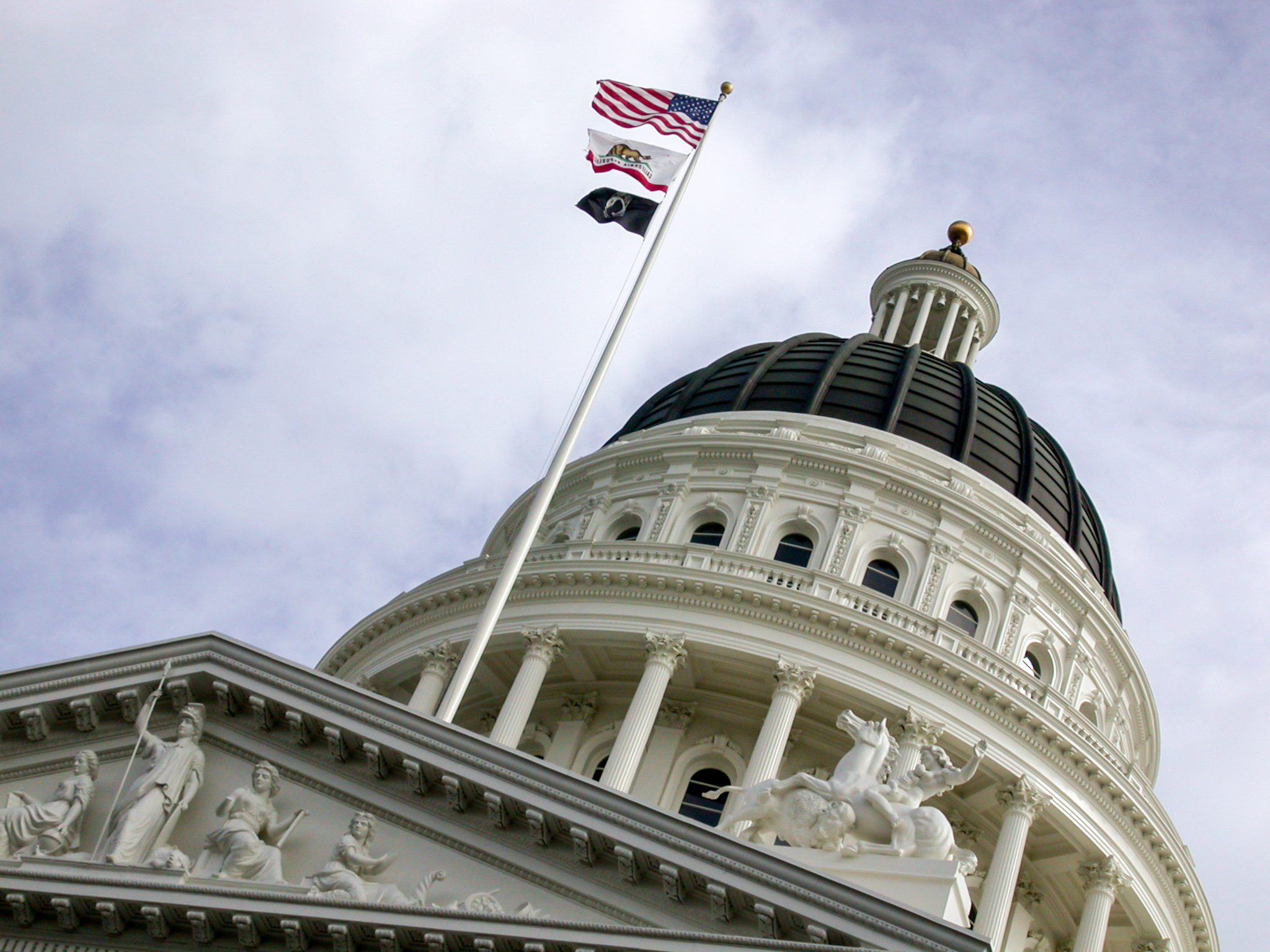

California Governor Gavin Newsom signed AB 2409 on 27 September, creating a state prohibition on covered public officers and certain public employees issuing memecoins. The law also restricts digital-asset service providers from offering a defined class of official-linked memecoins to California residents when those tokens are issued on or after 1 January 2027.
What the signed law actually does
The enrolled bill defines a memecoin as a digital asset that uses the name, likeness, image or branding of an individual, character or social trend as its primary value driver. It bars a California public officer or public employee covered by the statute from issuing one. “Issuing” is defined broadly: making a token available for public purchase, donation or exchange of anything of value, regardless of whether the official promotes it.
The covered group includes elected and appointed state and local officers, members of specified boards and advisory bodies, and public employees who have decision-making authority over bids or contracts. That scope matters because the measure is aimed at conflicts of interest and monetisation of public position, not at every government worker who happens to own crypto.
- California public officers and covered public employees may not issue memecoins.
- From 1 January 2027, a digital-asset service provider may not list for purchase or sale to a California resident a qualifying memecoin issued by, or in partnership with, a federal public official or a state or local public officer.
- The California attorney general may seek injunctions and disgorgement; district attorneys, city attorneys and county counsel also receive enforcement authority over the state-official issuance ban.
- The statute covers digital assets broadly, including fungible and non-fungible representations of value, but applies its restrictions through the bill’s specific memecoin definition.
The listing provision is narrower than the headline ban. It applies to tokens issued on or after 1 January 2027 and offered by, or in partnership with, the specified officials. The law does not prohibit California residents from holding Bitcoin, ether or established memecoins such as DOGE, SHIB or PEPE. Nor does it create a general state ban on memecoin trading.
Why exchanges and token platforms should care
For platforms serving California residents, the practical issue is issuer and affiliation screening. A token’s marketing, branding and relationships may now matter as much as its code. Compliance teams may need to identify whether an official participated in issuance, whether a partnership exists and whether access should be geofenced. The bill’s broad definition of “issue” reduces the usefulness of arguing that an official merely accepted donations or allowed a token to be sold without directly promoting it.
That does not automatically mean immediate delistings. The provider restriction has a prospective 2027 issuance threshold, and implementation will depend on legal interpretation, guidance and enforcement. But the statute introduces a distinct state-level listing risk into a market where venues already manage sanctions, securities, consumer-protection and money-transmission obligations.
Market and trader relevance
The direct market impact is concentrated in political and official-linked meme tokens rather than the wider meme sector. These assets often rely on attention, perceived access and thin liquidity. A California access restriction could fragment liquidity, increase compliance costs and reduce the number of venues willing to list a borderline token. It may also encourage issuers to obscure affiliations or move activity offshore, raising due-diligence risk for traders.
The potentially constructive interpretation is that clearer conflict-of-interest rules reduce the chance that public office becomes a marketing asset for speculative tokens. Better screening could make compliant venues more credible and distinguish established community tokens from products whose value depends on an officeholder’s name or influence. That benefit remains an inference; the signed text establishes the restrictions, not their eventual market effect.
Bull, bear and base cases
Constructive case
Platforms adopt consistent screening, obvious conflict tokens lose access and enforcement deters impersonation and pay-to-play issuance. Market integrity improves without disrupting unrelated crypto assets.
Bear case
Uncertain definitions prompt broad geofencing or precautionary delistings, liquidity moves to less regulated venues and official-linked projects use opaque intermediaries to evade scrutiny.
Base case
The law operates as a narrow compliance precedent. Its first-order effect stays focused on future political memecoins, while established meme assets trade largely unchanged.
NetNapz assessment
Assessment: material for political-token compliance, limited for the broad crypto market. AB 2409 is notable because it joins an issuer conflict rule to a platform listing restriction, giving California authorities more than a disclosure-based response. It is not evidence that California has banned memecoins as an asset class, and traders should be sceptical of claims that it directly targets DOGE, SHIB or PEPE.
Confirmation: attorney-general or regulator guidance, explicit exchange policy changes, an enforcement case, or similar bills advancing in other large states. Invalidation or narrowing: guidance or court decisions that construe “partnership,” “branding” or “issue” tightly, combined with no material platform changes. The relevant horizon is 12–18 months because the provider rule is tied to tokens issued from 1 January 2027.
What to watch next
- California attorney-general guidance and the first enforcement posture.
- Exchange and broker policies for California customers before January 2027.
- Whether platforms require issuer attestations or enhanced identity checks.
- Litigation over speech, branding, affiliation or interstate-commerce questions.
- Federal ethics or digital-asset legislation addressing official-linked tokens.
- Copycat measures in other states and whether definitions converge.
Sources
- Office of Governor Gavin Newsom — signing announcement, 27 September 2026
- California Legislative Information — AB 2409 enrolled bill text
- CalMatters Digital Democracy — AB 2409 legislative record
- LegiScan — AB 2409 enrolled text and history
- Associated Press — background on official-linked memecoins and ethics concerns
Published 28 September 2026. Confirmed facts are drawn from the dated primary and corroborating sources above. Market scenarios and the NetNapz assessment are analysis, not investment advice.