

Houthi Strikes Hit Saudi Energy Facilities as Brent Pushes Toward $100
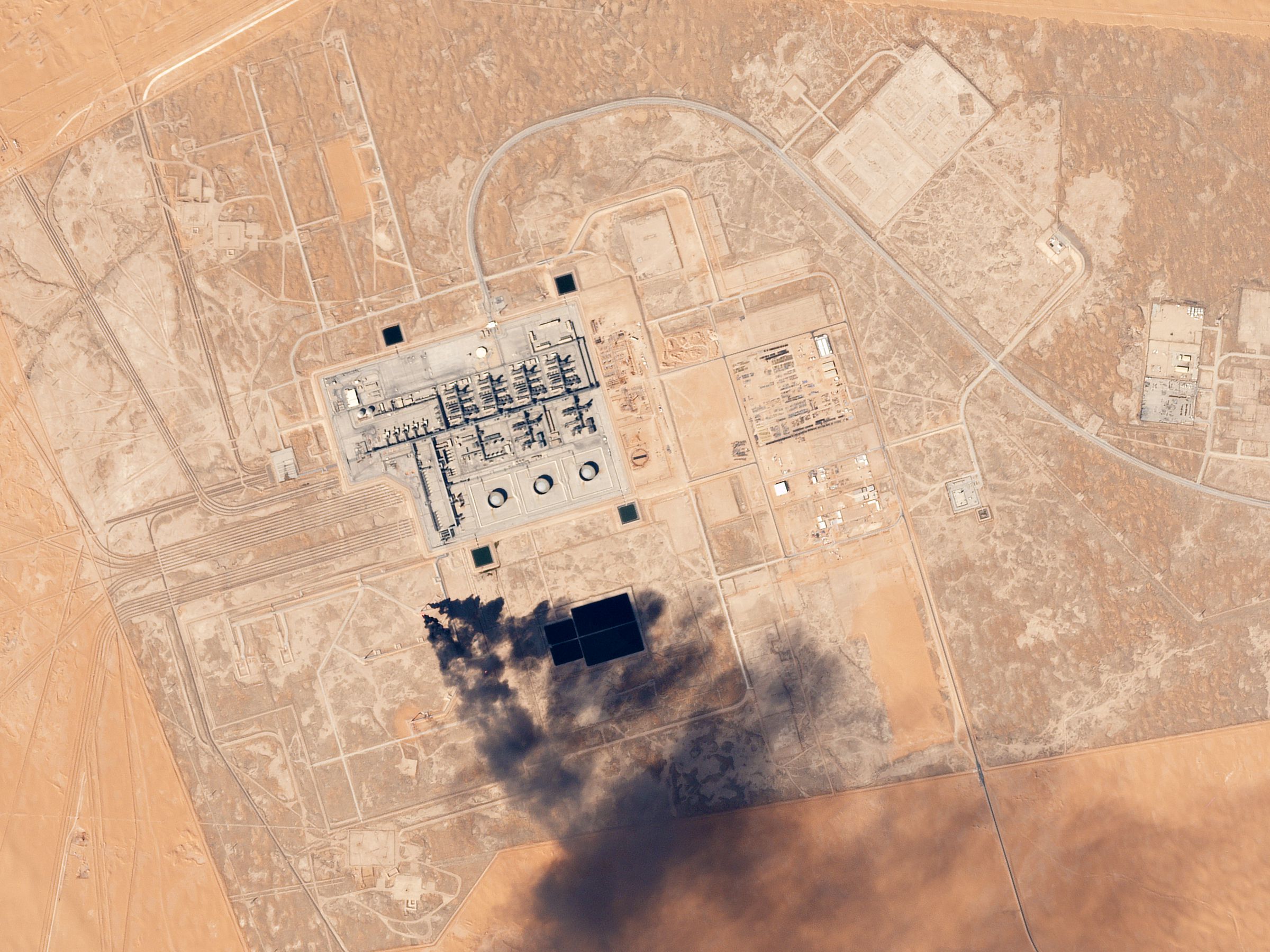
NetNapz Market Desk · September 8, 2026 — A new wave of Houthi missile and drone attacks struck civilian, economic and energy infrastructure across southern Saudi Arabia on Tuesday, causing fires and temporary operational halts at some facilities and injuring 73 civilians, according to Saudi authorities. The attacks hit Abha, Khamis Mushait, Jazan and Najran and represent a fresh escalation beyond the September 7 Jazan refinery strike.
Brent crude pushed toward the psychologically important $100-a-barrel threshold as traders repriced the probability that Gulf infrastructure disruption could move from isolated incidents into a broader supply and inflation shock. The immediate market question is no longer only whether Hormuz traffic remains constrained, but whether repeated fixed-asset attacks can impair Saudi production, refining or export resilience.
What happened
Saudi Arabia’s Energy Ministry said several energy-sector facilities and installations in the southern region were targeted on September 8. Fires broke out at multiple locations and some operations were temporarily halted while specialist teams contained fires, secured sites and assessed damage. Saudi authorities separately said 73 civilians, including women and children, were injured in attacks across four southern cities.
Saudi Arabia said it would take necessary measures to defend its sovereignty and protect national capabilities. Independent reporting from Reuters, the Associated Press and the Financial Times corroborated the attacks and operational disruptions. The Saudi Energy Ministry had not, at the time of publication, provided a complete facility-by-facility damage or production-loss estimate.
Why this matters for oil traders
The distinction between headline risk and physical supply risk is crucial. A missile threat can add a geopolitical premium; repeated fires and temporary shutdowns at energy facilities can change actual product availability, maintenance schedules, insurance costs and export reliability. Brent near $100 is therefore a decision zone rather than just a round number.
A sustained break above $100 accompanied by confirmed production or refining losses, weaker tanker traffic, rising freight and insurance costs, or further attacks on core Saudi infrastructure would strengthen the oil-shock thesis. Failure to hold the upper-$90s alongside rapid restoration of operations and stable export flows would argue that Saudi redundancy and operational resilience are absorbing the attacks.
Cross-asset implications
Higher oil prices matter well beyond energy. A durable crude shock can lift inflation expectations, pressure sovereign bonds, delay or reverse expectations for monetary easing and tighten financial conditions. That combination is typically challenging for long-duration growth equities, high-beta crypto and other liquidity-sensitive assets.
The yen is simultaneously strengthening as markets price a firmer Bank of Japan path, increasing the risk that an oil-driven global rates shock and a carry-trade unwind reinforce each other. Gold remains caught between safe-haven demand and the negative effect of higher real yields. The U.S. dollar can benefit from risk aversion, but that support is less straightforward when the yen is appreciating sharply and U.S. inflation risk is rising.
What to watch next
1. Saudi damage and production disclosures
The most important next data point is a quantified Saudi assessment of which facilities were affected, how long operations were halted and whether crude, refined-product or gas output was materially reduced.
2. Brent around $100
A sustained move through $100 would signal that the market is assigning a larger physical-risk premium. Rejection back into the mid-$90s would suggest resilience and alternative export capacity remain dominant.
3. Retaliation and escalation
Saudi or coalition military responses could increase the probability of further Houthi strikes and broaden risk toward Red Sea and Bab al-Mandeb shipping.
4. Hormuz and tanker flows
Shipping volumes, insurance costs and any new restrictions around the Strait of Hormuz remain essential confirmation data. Infrastructure attacks and shipping disruption together would create a more severe supply scenario than either in isolation.
5. Rates, yen and Nasdaq
Watch U.S. Treasury yields, USD/JPY and Nasdaq futures for evidence that the energy shock is feeding into global financial conditions. A simultaneous rise in oil and yields with a stronger yen would be a particularly difficult regime for leveraged risk assets.
Broader context
Saudi Arabia has demonstrated substantial redundancy and recovery capacity during earlier attacks. In April, the Saudi Energy Ministry said it restored the East–West pipeline to its full roughly seven-million-barrel-per-day pumping capacity after previous attacks. That resilience is an important counterweight to the most extreme supply-loss scenarios. The UAE is also expanding bypass infrastructure that can move crude to Fujairah outside the Strait of Hormuz.
But redundancy does not make repeated attacks irrelevant. Refinery outages can tighten diesel, jet fuel and gasoline even when crude production remains available, while repeated strikes can raise insurance and security costs throughout the regional supply chain.
Bottom line
The September 8 Houthi attacks are the strongest fresh Gulf escalation of the session because Saudi authorities confirmed both fires and temporary operational disruption across multiple energy facilities. Brent’s test of $100 is now the key market signal. Confirmation requires persistent physical disruption, tighter shipping conditions or further attacks; rapid restoration and stable exports would weaken the thesis.
Sources
Saudi Ministry of Energy and Saudi Ministry of Foreign Affairs statements carried by Saudi state media; Reuters, September 8, 2026; Associated Press, September 8, 2026; Financial Times, September 8, 2026. Image: Planet Labs via Wikimedia Commons, CC BY-SA 4.0.
Risk disclaimer: This article is for information and market analysis only and is not financial advice. Geopolitical events can cause extreme volatility and gaps in energy, FX, equity and crypto markets.