
 SPONSORED PARTNERMEXCExplore global spot and futures marketsEXPLORE MEXC →
 CHARTING PARTNERTradingViewAdvanced charts, indicators and market analysisOPEN CHARTS →
 TRADING PARTNERGMX via NetNapz TradeTrade decentralised perpetual marketsSTART TRADING →
Saudi Pipeline Shutdown and New Hormuz Ship Attack Deepen Gulf Oil Risk
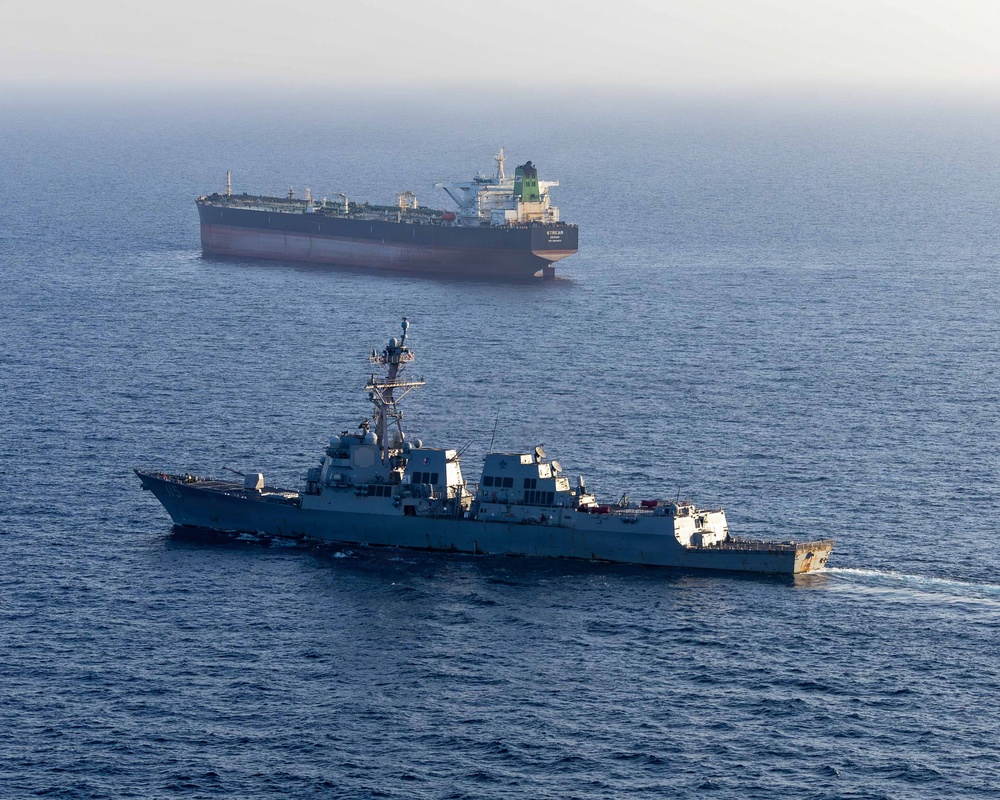
NetNapz Market Desk · September 13, 2026 — A fresh merchant-vessel incident in the Strait of Hormuz has added another layer of physical-flow risk to the Gulf energy shock. Reuters reported that UK Maritime Trade Operations received a report of a vessel struck by a projectile in the strait on September 13, intensifying concern over shipping safety after Saudi Arabia temporarily shut its 1,200-kilometre East-West oil pipeline following a drone attack. The Saudi route had been moving roughly 4 million to 5 million barrels per day in recent months, making it a critical bypass around disrupted Hormuz traffic. Iran-aligned Houthi gains around Perim Island are simultaneously increasing pressure at Bab el-Mandeb. With no public attribution yet for the latest vessel incident, the confirmed market signal is the widening threat to both maritime chokepoints and the fixed infrastructure designed to bypass them, keeping Brent above $100 and the broader inflation-and-rates channel in focus.
CENTCOM identified the vessels as M/T Kaviz, M/T Charminar, M/T Horizon 1 and M/T Riesco in the Gulf of Oman, plus M/T Derya near Kharg Island. The command said crews were directed to abandon ship before the vessels were struck and rendered inoperable. It also said no American personnel were harmed in the attempted Iranian missile attacks. The September 8 action follows U.S. strikes on three Iranian crude carriers on September 5, turning what had been a discrete retaliation cycle into a repeated campaign against vessels Washington says support the IRGC's oil-financing network.
The market impact is broader than the lost vessels themselves. The key issue for traders is whether repeated tanker strikes and retaliation threats begin to impair commercial traffic, insurance availability, export loading or confidence in Gulf energy flows. By the September 11 U.S. settlement, Reuters reported Brent had reversed from its early $109.97 high to close at $104.61, while WTI settled at $100.05 as hopes for a temporary Middle East agreement triggered profit-taking. Even after the reversal, Brent remained on track for a weekly gain above 8%, while U.S. diesel prices stayed above $6 a gallon at record levels. The combination shows that headline de-escalation can quickly compress crude risk premium even as refined-product scarcity and physical-flow disruption keep the inflation channel active. Preliminary Kpler tracking cited by Reuters showed only seven commercial vessel transits through Hormuz on September 10, down from 11 the prior day and dramatically below the roughly 125-per-day pre-war average; AIS-dark traffic means the count is not exhaustive, but the direction confirms severe visible-flow impairment. The move followed the largest escalation in shipping attacks since the current Iran war began, while Iran-aligned Houthis seized Yemen's port of Mocha, adding a fresh threat to Red Sea traffic as Hormuz transit remained restricted. By September 11, the shipping-cost channel had also moved into record territory: Reuters cited Baltic Exchange data showing Gulf of Oman-to-China VLCC freight around Worldscale 450, equivalent to roughly $11.50 per barrel, while record rates were also spreading to West Africa-to-Asia routes. Separate shipping-market reporting based on Baltic Exchange assessments showed benchmark Middle East Gulf-to-China VLCC earnings above $800,000 per day, underscoring that the disruption is increasingly being transmitted through effective tanker scarcity and delivered crude costs, not just the outright oil price. Chinese independent refiners have also rushed to secure more than 20 million barrels from alternative suppliers in West Africa, Canada and South America, pushing spot-market tightness into the physical crude trade. On September 11, the IEA's monthly oil-market update added a deeper balance-sheet warning: Reuters reported the agency now expects 2026 global oil supply to fall by 5.7 million barrels per day, with normal Gulf flows delayed into 2027, while inventories fell by roughly 3.1 million barrels per day in August. Reuters also reported the IEA estimates Saudi crude supply fell to about 6 million barrels per day in August, the lowest level in more than three decades, after attacks on regional energy and shipping infrastructure; Saudi figures reported to OPEC differ, but the IEA estimate is a stronger signal of how much crude reached the market. That shifts the desk's base case further from a short-lived geopolitical premium toward a potentially persistent physical-supply deficit. By Friday's U.S. close, the oil pullback gave risk assets some relief: Reuters reported the Dow up 1.13%, the S&P 500 up 1.03% and the Nasdaq up 1.15%, while the 10-year Treasury yield finished near 4.96% after touching 4.979% earlier in the day. That combination leaves the core cross-asset signal intact: headline de-escalation can support equities quickly, but yields remain restrictive while energy inflation and physical-flow risks stay elevated.
Trump adds a new policy-risk layer to the oil shock
September 13 policy update: President Donald Trump said the United States could maintain a presence in Iran and retain control of oil resources as part of a future settlement, comparing the idea with the U.S. approach to Venezuela. Reuters reported the remarks during Trump’s visit to Ireland. The comments do not establish a formal U.S. policy or negotiated outcome, but they add a new geopolitical variable to an already stressed physical market: traders must now price not only attacks on shipping and bypass infrastructure, but also uncertainty over the terms under which Iranian barrels could eventually return to global supply.
East-West pipeline shutdown raises the bypass-route risk
September 12 update: Saudi Arabia temporarily shut its 1,200-kilometre East-West oil pipeline as a precaution after a drone attack that Saudi and Iraqi officials said originated in Iraq. Reuters reported the line had been moving roughly 4 million to 5 million barrels per day in recent months—about 4% to 5% of global supply—and had become a critical bypass for the Strait of Hormuz shipping logjam. The same regional escalation also put the Bab el-Mandeb route under greater pressure after Iran-aligned Houthis seized the strategic island of Perim at the mouth of the Red Sea. For traders, this materially raises the tail risk that disruption migrates from tankers and freight costs into the fixed infrastructure designed to route barrels around constrained maritime chokepoints.
The desk is treating this as a higher-quality physical-supply signal than another intraday crude-price spike. The market reaction is now visible beyond oil: Reuters reported Saudi Arabia's benchmark equity index ultimately closed 1.3% lower on September 13, its steepest decline since early April, with Saudi Aramco down 1.6%, Saudi Arabian Mining down 3.2% and Saudi Aramco Base Oil Co - Luberef down 10% after the pipeline attacks. That broadens the event from an energy-supply story into a regional risk-premium shock. Saudi Arabia's Foreign Ministry, in a September 12 statement carried by the Saudi Press Agency, said several drones launched from Iraq targeted the East-West Pipeline in Riyadh and Madinah, causing injuries and damage; Riyadh said it was holding back from a military response at this stage while reserving the right to protect its facilities. If the East-West line remains constrained while Hormuz traffic stays depressed and Bab el-Mandeb security deteriorates, Saudi export flexibility falls sharply. A rapid pipeline restart without material export losses would reduce the immediate supply impact, but repeated attacks on bypass infrastructure would keep a larger risk premium embedded in crude, diesel, freight and long-end inflation expectations.
September 13 supply-risk update: Reuters reported that oil buyers and traders now see a prolonged East-West pipeline outage as threatening roughly 4% of global oil supply if the route is not restored within days. The estimate is a market assessment rather than a confirmed Saudi export-loss figure: Riyadh has not published a repair timeline or full damage assessment. Saudi Arabia can draw on storage and alternate export infrastructure, but available stocks are finite, so each additional day of pipeline disruption increases the risk that the problem shifts from routing flexibility into actual barrels missing from the market. That distinction is the next confirmation test for Brent, diesel, freight and long-end inflation expectations.
What changed in the Gulf risk premium
The September 8 tanker strikes are independently newsworthy because they show the September 5 exchange was not a one-off. By September 9, Iran said it had attacked 10 ships near the Strait of Hormuz in the biggest declared wave of tit-for-tat shipping attacks since the war began, with at least one seafarer reported killed and another missing. CENTCOM says Iran again attempted to hit a U.S. warship, and the U.S. response expanded from three tankers to five. That repetition raises the probability that maritime assets themselves remain part of the military pressure campaign.
For oil, the distinction between headline risk and physical-flow risk remains critical. Destroyed or disabled tankers can tighten available shipping capacity and increase insurance and routing costs, but the larger upside tail for crude would come from disruption to Kharg Island loading, a sustained reduction in Strait of Hormuz transit, attacks on Gulf export infrastructure or a broader withdrawal by commercial operators.
Why $100 Brent matters beyond energy
Brent near $100 is now a macro decision level rather than merely an oil-market milestone. A sustained break above it would strengthen the inflation impulse just as U.S. markets are reassessing the probability of another Federal Reserve rate increase. That transmission runs directly into Treasury yields, the dollar, equity valuation multiples and financing conditions.
Tuesday's U.S. session illustrated the linkage: the Dow fell 1.18%, the S&P 500 lost 0.58% and the Nasdaq Composite declined 0.32%. Energy shares benefited from higher crude while software and other duration-sensitive areas remained under pressure. In early Asian trade Wednesday, USD/JPY was around the low-153s and Japanese chip shares were firmer, showing that the AI-hardware bid remains alive even as the macro backdrop stays restrictive.
Bitcoin, Ethereum and crypto beta
Crypto remains exposed mainly through the macro channel. Bitcoin has struggled below $80,000 while higher oil, higher yields and a stronger-for-longer policy narrative reduce appetite for leveraged risk. Ethereum and liquid altcoins remain even more sensitive to changes in liquidity and real yields. The bullish crypto interpretation would require BTC to absorb the oil shock while Treasury yields stabilize and institutional flows improve; continued weakness alongside rising crude would reinforce a conventional risk-off regime.
That is why NetNapz is not treating the tanker story as a direct crypto catalyst. It is a liquidity and discount-rate catalyst. The relevant confirmation is whether crude breaks higher and drags yields and the dollar with it, or whether oil fails at the $100 area and the broader risk complex begins to repair.
Gold, dollar and USD/JPY
Gold faces competing forces. Geopolitical stress supports safe-haven demand, but rising nominal and real yields can pressure a non-yielding asset. The dollar has a similar two-sided setup: safe-haven demand is supportive, while USD/JPY also reflects the strengthening Bank of Japan tightening case after Japan's upgraded growth data. A decisive yen move therefore requires traders to separate U.S. rate pressure from Japan-specific policy repricing.
NetNapz assessment
The September 8 tanker strikes strengthen the oil-inflation-rates regime because they demonstrate repeated military escalation rather than a single isolated exchange. The immediate decision point is whether the September 11 reversal from Brent's $109.97 high to a $104.61 settlement is a temporary de-escalation move inside a still-tight physical regime, or the start of a larger geopolitical-premium unwind. WTI settled at $100.05, effectively on the $100 threshold, while the U.S. 10-year finished the session near 4.96% and record U.S. diesel prices kept the inflation-and-duration shock alive. Persistence at those levels alongside weaker Gulf and Red Sea shipping conditions would raise the probability of another leg higher in inflation expectations and yields, increasing valuation pressure on duration-sensitive equities and crypto.
The thesis weakens if Brent repeatedly fails near $100, Hormuz traffic remains functional, Kharg loading continues normally and neither side broadens attacks against commercial shipping or export infrastructure. In that scenario, the geopolitical premium can decay even while the conflict remains unresolved.
What to watch next
- Brent: whether Brent can stabilize around $104–$105 after rejecting the $109.97 high while WTI hovers around $100, or whether tentative agreement hopes drive a deeper risk-premium unwind despite still-tight physical and refined-product conditions.
- Hormuz and Gulf shipping: commercial traffic, insurance availability and any fresh vessel warnings.
- Kharg Island: evidence of disruption to loading infrastructure would be substantially more important than tanker losses alone.
- CENTCOM and Iranian statements: additional missile launches, tanker strikes or attacks on regional bases.
- U.S. 10-year yield and DXY: confirmation that the energy shock is feeding the inflation/rates channel.
- Nasdaq 100 and Nvidia: whether AI hardware can continue to outperform despite higher discount rates.
- BTC and ETH: whether crypto stabilizes below recent resistance or resumes deleveraging as macro liquidity tightens.
Bottom line
The Gulf energy-risk story has materially escalated. CENTCOM says U.S. forces destroyed five Iranian crude carriers on September 8 after repeated IRGC missile attempts against an American warship, only three days after the U.S. hit another three Iranian tankers. With Brent having hit $109.97 before settling at $104.61 and WTI closing at $100.05 on September 11, the trader question is whether tentative agreement hopes can unwind enough geopolitical premium to offset still-severe shipping disruption, record U.S. diesel prices and a long-end yield shock still near 5%.
Sources
- Reuters — Trump says the U.S. could remain in Iran and retain oil resources as part of a future settlement, September 13, 2026
- Reuters — prolonged Saudi East-West pipeline outage could threaten roughly 4% of global oil supply, September 13, 2026
- Reuters — Saudi shares fall after East-West pipeline attack, September 13, 2026
- Saudi Press Agency — Foreign Ministry statement on drones launched from Iraq targeting the East-West Pipeline, September 12, 2026
- Reuters — fresh vessel attack report in the Strait of Hormuz, September 13, 2026
- Reuters — Saudi Arabia shuts East-West oil pipeline after drone attack as Houthis tighten Red Sea grip, September 12, 2026
- U.S. Central Command Public Affairs via DVIDS — September 8 release on five Iranian tanker strikes
- Reuters — Brent breaks above $100 as Middle East conflict escalates, September 9, 2026
- Reuters — Brent reaches $105.26 and WTI breaks $100 as shipping attacks escalate, September 10, 2026
- Reuters — Brent approaches $110 as oil heads for a roughly 13% weekly gain, September 11, 2026
- Reuters — Hormuz commercial vessel traffic falls to seven transits on September 10, September 11, 2026
- Reuters — Global bond yields spike as the oil shock deepens inflation risk, September 11, 2026
- Reuters — IEA warns the 2026 oil supply gap will deepen as normal Gulf flows are delayed, September 11, 2026
- Reuters — IEA estimates Saudi crude supply fell to a more than three-decade low in August, September 11, 2026
- Reuters — record VLCC freight rates as Gulf shipping attacks raise delivered crude costs, September 11, 2026
- The Washington Post — independent reporting on the September 8 tanker strikes
- The Wall Street Journal — conflict and U.S. military context
- DVIDS / U.S. Central Command — public-domain U.S. Navy hero image
Reporting on an active conflict can change quickly. Military claims, market levels and physical-flow conditions may change as new official information emerges. This article is informational and does not constitute financial advice.