

Google Commits €13B to Finland AI Infrastructure With 22-Year Nuclear Power Deal
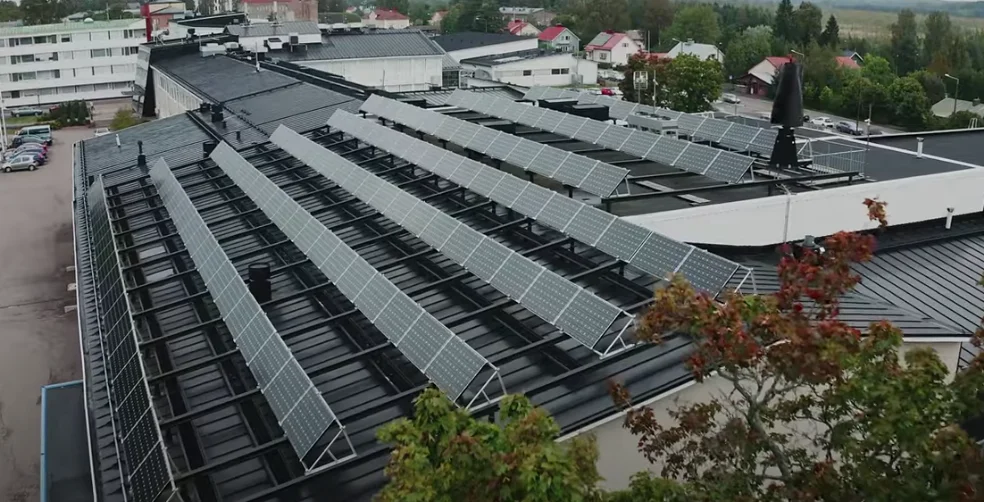
NetNapz Market Desk · September 9, 2026 — Google is committing €13 billion to Finland over 2027 and 2028 in its largest single investment in Europe, expanding data centers and supporting infrastructure as demand for AI services grows. The announcement is paired with a 22-year power-purchase agreement with Fortum that will cover up to 50% of the Loviisa nuclear power plant’s capacity, tying the next phase of European AI infrastructure directly to long-duration low-carbon power.
The combination matters because AI capex is increasingly constrained by electricity, grid capacity and the cost of securing reliable power. Google says the Finland program spans digital infrastructure, clean-energy projects and economic partnerships in Hamina, Kajaani, Muhos and Vaala. Fortum says the nuclear agreement will begin in 2028 at lower capacity and rise to 50% of Loviisa output for 2030–2049, providing revenue certainty for plant-life extension and capacity upgrades through 2050.
What Google and Fortum actually announced
Google says the €13 billion program will support its core services, including Search, Maps and Gemini, while expanding Finland’s role in its European infrastructure network. The company estimates the construction phase in 2027 and 2028 will support more than 37,000 jobs nationwide and contribute €3.6 billion annually to Finnish GDP. It is also committing €31 million to local communities and training programs.
On the energy side, Google signed a 22-year agreement supporting the life extension of Fortum’s Loviisa nuclear plant. Fortum says the PPA will contract up to half of the plant’s generation capacity and help support an approximately €1 billion investment program through 2050. The agreement is also expected to enable an additional 10 MW uprate on top of a previously planned 38 MW increase expected in 2028.
The partnership goes beyond nuclear. Google says it is adding onshore wind and contracting for a new 94 MW battery system, while Fortum says the companies have also signed a memorandum of understanding covering new nuclear, renewable capacity, flexibility solutions and energy-portfolio services.
Why this matters for the AI infrastructure trade
The market has spent much of the AI cycle focused on accelerators, networking and cloud demand. The next constraint is increasingly physical: power generation, transmission, cooling and land. Large AI data centers require dependable electricity around the clock, which is pushing hyperscalers into longer-duration contracts and direct partnerships with utilities and energy producers.
Google’s Finland agreement is notable because it links a hyperscaler’s AI expansion to the economics of extending an existing nuclear asset. That is different from a short-term renewable-energy purchase. Fortum says the contract materially improves the risk-adjusted return profile of Loviisa and is expected to lift group comparable return on net assets by about 1.4 percentage points over time once 50% of capacity is contracted.
For investors, the read-through is broader than Alphabet. AI infrastructure demand can support utilities, nuclear operators, grid equipment, power-management systems, battery storage, cooling, construction and networking suppliers. It also raises the strategic value of regions with abundant low-carbon electricity and stable grids.
Alphabet, semiconductors and the capex signal
The announcement reinforces the argument that hyperscaler AI spending remains structurally large even as markets debate software monetization and elevated technology valuations. A €13 billion two-year infrastructure commitment does not translate directly into semiconductor revenue, but it supports the ecosystem that allows more compute to be deployed.
That is relevant for Nvidia, AMD, Broadcom and custom-chip suppliers because data-center expansion determines how much accelerator and networking capacity can ultimately be installed. It is also relevant for the growing custom-silicon competition highlighted by Amazon’s new Qualcomm partnership. The investment cycle is broadening from chips alone into power, optical connectivity, storage, cooling and sovereign infrastructure.
NetNapz assessment
Google’s Finland program strengthens the AI-infrastructure thesis because it is a primary-source, multi-year capital commitment tied to an unusually long energy contract rather than a marketing roadmap. The most important signal is not the €13 billion headline by itself; it is the willingness to secure nuclear generation through 2049 and pair it with wind and battery capacity.
The bullish read-through is strongest for the broader power-and-infrastructure complex if other hyperscalers continue signing similarly long-duration agreements. The thesis weakens if data-center utilization disappoints, AI-service demand slows materially or power constraints cause major projects to be delayed despite announced capex.
What traders should watch next
- Alphabet capex: whether future earnings guidance confirms that infrastructure spending remains elevated.
- European power markets: additional hyperscaler nuclear, grid and storage agreements would strengthen the theme.
- Fortum: execution on Loviisa life-extension investments and the planned capacity uprates.
- AI hardware: whether Nvidia, AMD, Broadcom, Qualcomm and networking suppliers continue to translate infrastructure buildout into orders.
- Grid bottlenecks: transformer, transmission and permitting constraints remain potential brakes on announced data-center projects.
- Rates: higher long-duration yields can pressure AI-equity multiples even while physical infrastructure demand remains strong.
Bottom line
Google’s €13 billion Finland commitment is a fresh confirmation that the AI capital cycle is moving deeper into physical infrastructure. The 22-year Loviisa nuclear agreement shows how hyperscalers are beginning to secure power with the same strategic urgency previously reserved for chips and cloud capacity. For markets, the opportunity set is widening from semiconductor leaders into utilities, nuclear assets, storage, grid equipment and the companies that build and connect the next generation of AI data centers.
Sources
- Google — €13 billion Finland AI infrastructure announcement, September 9, 2026
- Google — Finland clean-energy and nuclear partnership details, September 9, 2026
- Fortum — 22-year Loviisa nuclear PPA and financial implications, September 9, 2026
- Reuters — independent report on Google’s Finland investment, September 9, 2026
This article is informational and does not constitute financial advice. Capital-spending plans, project timelines and energy agreements can change.